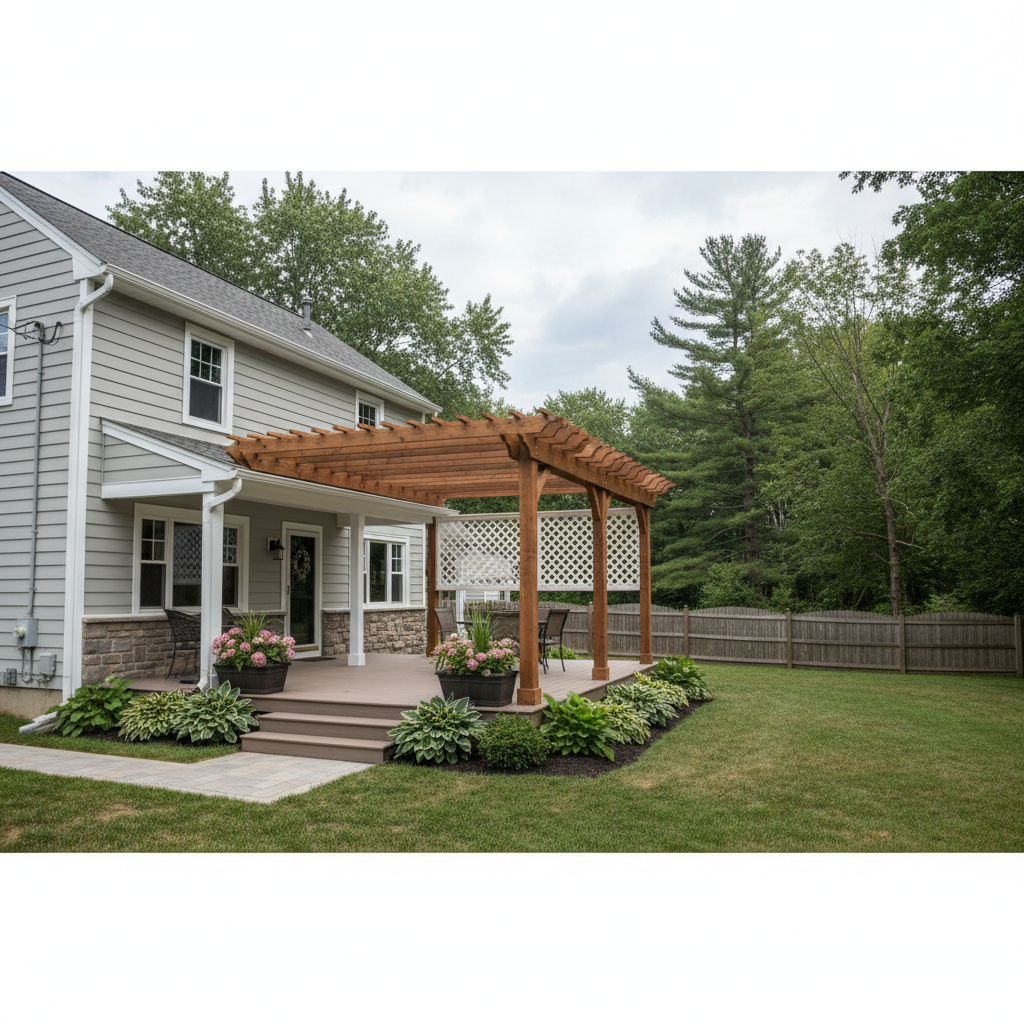
You're probably picturing a beautiful, shady spot in your backyard, right? A pergola can totally transform your outdoor living space, making it feel like an extension of your home. But here in Bristol, building one isn't just about picking out a nice design from a magazine. There's a real art and science to getting it right, especially with our specific New England weather.
Why Bristol's Weather Matters for Your Pergola
We see it all here, don't we? From those scorching humid summers that make you crave any bit of shade, to the heavy snowfalls that can really put a strain on outdoor structures. That's why when I'm planning a pergola, I'm not just thinking about how it looks; I'm thinking about how long it will last. You can't just slap up a kit from a big box store and expect it to hold up for years, not with our freeze-thaw cycles and those occasional Nor'easters that blow through.
We really have to consider the materials. While pressure-treated lumber is a common choice — and a good one for its resistance to rot and insects — you've also got options like cedar or even low-maintenance composite materials. Each has its pros and cons, especially when you think about how they'll weather a Bristol winter. For example, if you're up near Federal Hill, where some of those older homes have less protected yards, you might want to lean towards something that can really take a beating from the elements.
Foundation First: It's Not Just About the Top
I can't stress this enough: the foundation is everything. You wouldn't build a house on sand, and you shouldn't build a pergola without proper footings. Here in Connecticut, we've got frost lines to contend with. That means your footings need to go deep enough – typically 42 inches – to prevent frost heave. If you don't go deep enough, the ground freezes, pushes your posts up, and then when it thaws, they settle back unevenly. Next thing you know, your beautiful pergola is leaning or twisting. We've seen it happen. It's a pain to fix later, so get it right the first time.
Sometimes we're digging into rocky soil, sometimes it's more clay-like. Knowing how to handle those different conditions, how to pour a solid concrete footing that's going to last — that's where local experience truly pays off. It's not something you learn from a YouTube video, believe me.
Permits and Local Codes: Don't Skip This Step
This is probably the least exciting part of any project, but it's critical. Depending on the size and complexity of your pergola, you might need a building permit from the City of Bristol. Trust me, you don't want to build something only to find out later you have to tear it down because you didn't follow the rules. We know the local zoning regulations and building codes, so we can help you through that process. It saves you headaches and makes sure your project is up to snuff.
Designing for Your Bristol Home and Lifestyle
Think about how you'll use your pergola. Is it for dining? For a quiet reading nook? Are you going to grow vines on it? All these things impact the design. We often build pergolas that integrate smoothly with existing decks or patios, creating one cohesive outdoor space. For example, if you've got a classic colonial in the West End, you might want a more traditional, sturdy design. If you're in a newer development, maybe something a bit more modern. The goal is to make it look like it was always meant to be there.
We've built all sorts of pergolas for folks around here. Some are simple, providing just enough shade for a small bistro set. Others are elaborate, with retractable canopies, integrated lighting, and even outdoor fans. Whatever your vision, we can help bring it to life, making sure it's built right for Bristol conditions.
When you're ready to add that perfect shaded retreat to your backyard, give us a call at All Star Decks. We'll make sure your pergola isn't just pretty, but built to last for years of enjoyment.