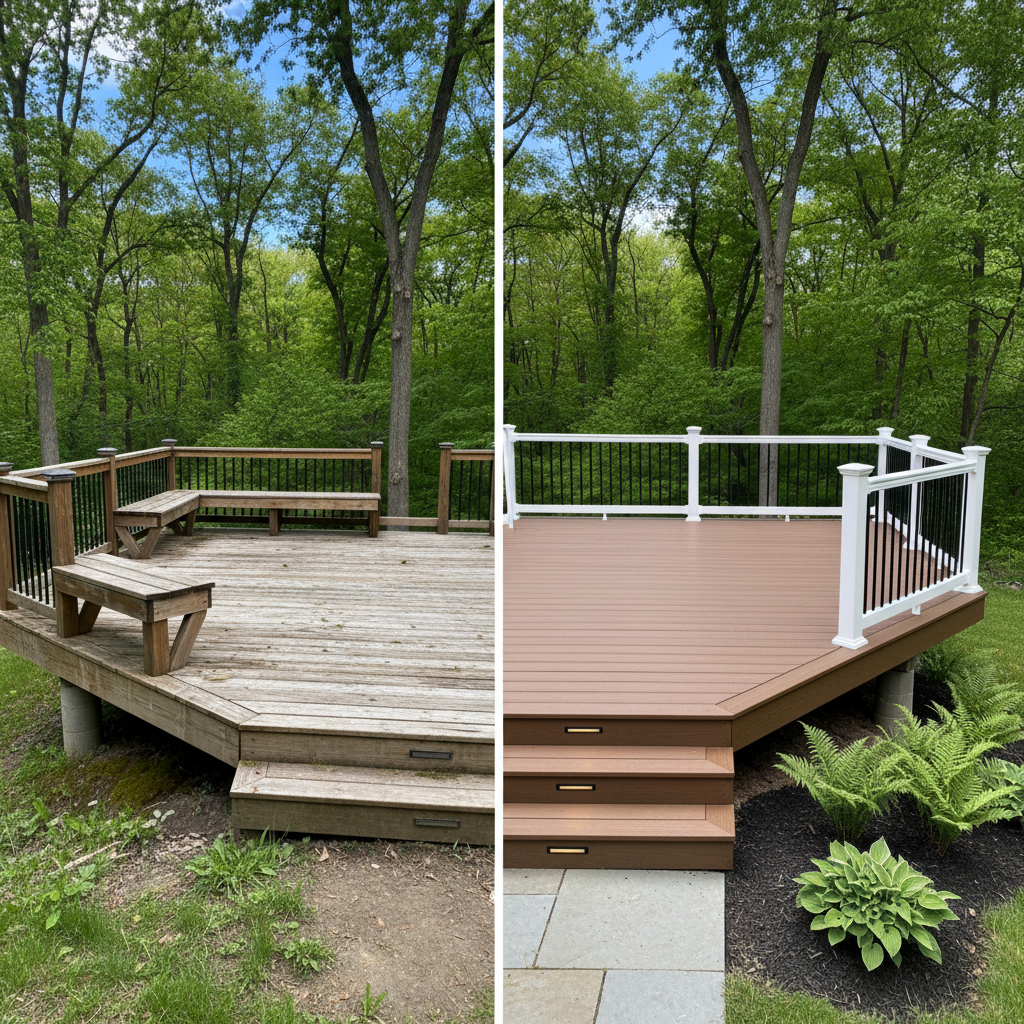
Capped vs. Uncapped Composite: What's the Real Difference?
Thinking about a composite deck for your Bristol home? Smart move. They're a fantastic alternative to wood, especially with our New England weather. But when you start looking, you'll quickly run into terms like 'capped' and 'uncapped' composite. What does that even mean, and why should you care?
Simply put, it's all about how the board is made and what it's covered with. Both types are made from a mix of wood fibers and recycled plastics. That's what gives them their rot resistance and stability. The big difference comes down to that outer layer.
Uncapped Composite: The Original Workhorse
Uncapped composite, sometimes called first-generation composite, was the original. It's still around, and it's got its place. Here's the deal:
How it's made: The wood fibers and plastic are mixed and extruded into a board. That's it. The surface is the same material all the way through.
Durability & Maintenance: It's definitely more durable than wood. You won't be staining or sealing it. But because the wood fibers are exposed on the surface, it can still absorb some moisture. This means it's more prone to fading over time, and it can be susceptible to mold and mildew if not cleaned regularly. You might see some minor scratching more easily too.
Appearance: It tends to have a more uniform, sometimes slightly 'plastic-y' look. The color options are usually more limited, and they don't mimic natural wood grain as closely as newer options.
Cost: This is where uncapped usually wins out. It's generally the most budget-friendly composite option.
We've put in uncapped decks in places like Forestville and Terryville years ago, and they're still holding up. They just require a bit more elbow grease to keep them looking pristine.
Capped Composite: The Modern Standard
Capped composite is what most people are talking about when they say 'composite deck' these days. It's the evolution of the original, and it addresses a lot of its shortcomings.
How it's made: It starts with that same wood-plastic core, but then it gets an extra layer – a 'cap' – of high-performance polymer material. Think of it like a protective shell around the board.
Durability & Maintenance: This cap is a game-changer. It makes the board highly resistant to fading, staining, scratching, and mildew. Water beads right off it. You'll still want to clean it occasionally, but it's much less work than uncapped. It's built to withstand our harsh Bristol winters and humid summers without breaking a sweat.
Appearance: This is where capped composite truly shines. The cap allows for incredibly realistic wood grain patterns, multi-tonal colors, and rich, deep hues that look just like exotic hardwoods. You've got a huge range of styles to choose from to match any home.
Cost: Naturally, that extra layer of technology and enhanced aesthetics comes with a higher price tag. Capped composite will be more expensive upfront than uncapped.
Which One Should You Choose for Your Bristol Home?
Alright, so you've got the rundown. Now for the million-dollar question: which is right for you? As a contractor who's built plenty of both, here's my honest take:
If your budget is really tight, and you don't mind a bit more cleaning and a slightly less 'natural' look, uncapped composite is a perfectly fine choice. It's still better than wood for low maintenance.
However, for most homeowners in Bristol, I strongly recommend **capped composite decking**. Here's why:
Longevity: The cap protects the board so much better. It's going to look great for decades with minimal effort, even with the freeze-thaw cycles we get here in Connecticut.
Appearance: You get so many more design options, and the look is just superior. It really enhances your home's curb appeal.
Resale Value: A beautiful, low-maintenance capped composite deck is a huge selling point if you ever decide to move.
Peace of Mind: You'll spend less time worrying about your deck and more time enjoying it. That's what it's all about, right?
Yes, the upfront cost is higher for capped composite. But when you factor in the almost non-existent maintenance, the incredible durability, and the stunning good looks that last, it's an investment that pays off big time over the life of the deck. You're not just buying a deck; you're buying years of hassle-free enjoyment.
Here at All Star Decks, we work with both, but we'll always guide you towards the best value and long-term satisfaction. Give us a call, and we can show you samples and talk through what makes the most sense for your specific project.