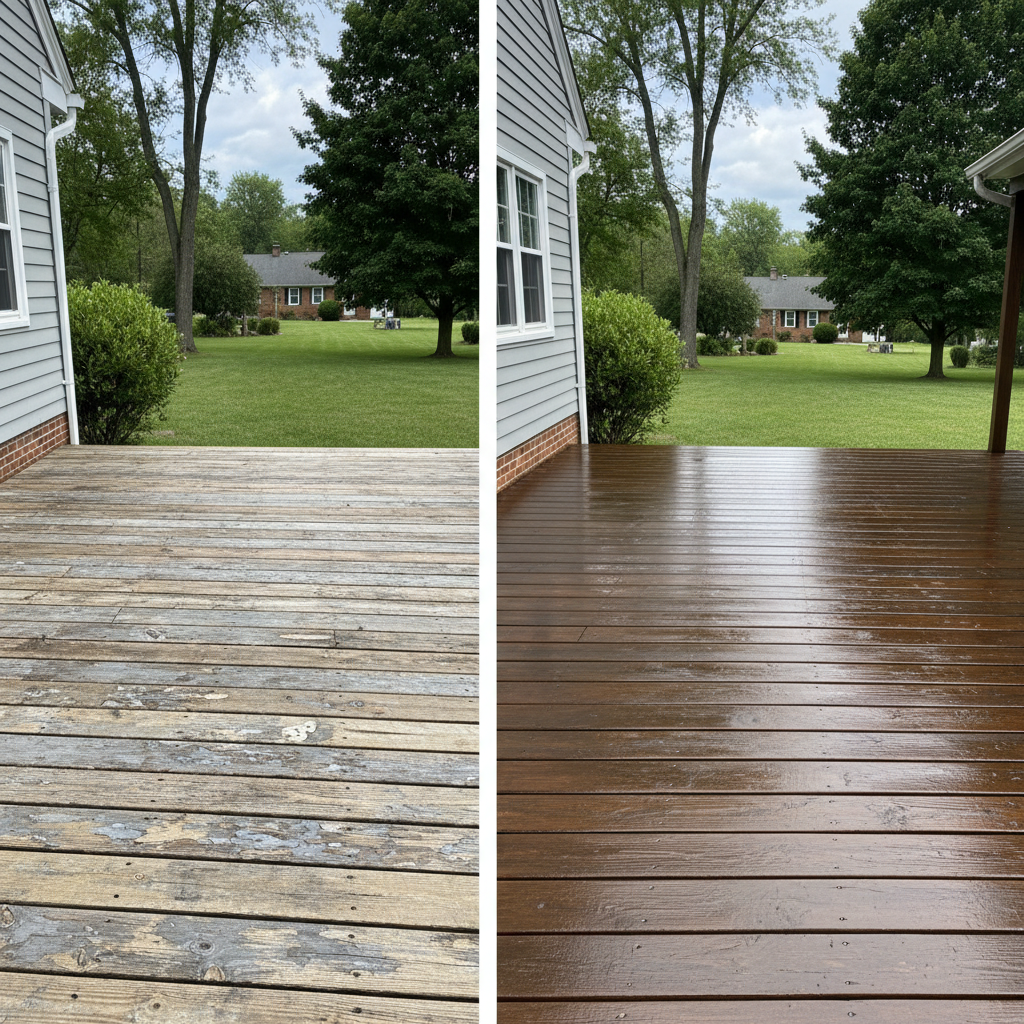
Alright, let's talk decks. You've got a wood deck, maybe it's looking a little tired, and you're thinking it's time for a refresh. The big question always comes up: should I paint it or stain it? It's not just about color; it's about protection, maintenance, and how long you want to be messing with it. I've been building and refinishing decks around Bristol for years, and I've got some strong opinions based on what I've seen hold up – and what doesn't – with our New England weather.
Deck Paint: The Good, The Bad, and The Ugly
When you paint a deck, you're essentially putting a thick, opaque layer on top of the wood. It completely covers the grain, giving you a solid color finish. Think of it like painting the walls inside your house, but for outside. You can get some really vibrant colors, which is a big draw for some folks who want their deck to pop.
Appearance & Aesthetics
If you're after a uniform, solid color, paint delivers. It's great for hiding imperfections in older wood, like minor stains or discolorations that even a good cleaning won't get rid of. You can match your deck to your house trim or create a bold statement. The downside? You lose the natural beauty of the wood grain. It's gone. If you love the look of wood, paint isn't for you.
Durability & Protection
Paint forms a film on the surface of the wood. This film is pretty good at blocking UV rays and moisture, which is what breaks down wood over time. A good quality deck paint can offer decent protection. However, here's where we run into trouble, especially in places like Bristol. Our winters are harsh, with freezing and thawing cycles. That film of paint is constantly expanding and contracting. What happens? It cracks, peels, and chips. Once that film is compromised, water gets underneath, and it starts to lift the paint right off. Then you've got a real mess on your hands.
Maintenance & Cost
Initial cost for paint and application might be similar to stain, but the long-term maintenance is where it gets expensive and time-consuming. When paint starts to peel, you can't just slap another coat on it. You have to scrape, sand, and prep the surface meticulously to get a smooth, durable finish again. If you don't, the new paint will just peel off faster. This can be a huge job every few years, especially if you've got a big deck. I've seen homeowners in the Federal Hill area spend entire weekends just prepping their painted decks for a new coat.
Deck Stain: My Go-To for Bristol Decks
Now, let's talk about stain. Deck stains come in various opacities: clear, semi-transparent, semi-solid, and solid. Unlike paint, stain penetrates the wood fibers. It doesn't form a film on top; it soaks in.
Appearance & Aesthetics
This is where stain really shines, in my opinion. Even solid stains allow some of the wood's natural texture to show through. Semi-transparent and semi-solid stains enhance the wood grain, letting that beautiful natural character come through while still adding color. You get that warm, natural wood look that most people want from a deck. It just looks more authentic, you know?
Durability & Protection
Because stain penetrates the wood, it doesn't peel or chip like paint. Instead, it slowly wears away over time. This is a huge advantage for our climate. When water gets into the wood, it doesn't lift a film; it just means the stain needs to be refreshed. Good quality stains, especially oil-based ones, offer excellent UV protection and water repellency. They protect the wood from the inside out, rather than just sitting on the surface.
Maintenance & Cost
This is the big win for stain. When it's time to re-stain, the prep work is usually much simpler. A good cleaning, maybe a light sanding in high-traffic areas, and then you can apply a new coat. You don't have to scrape off old, peeling layers. This saves you a ton of time and labor, which means less money if you're hiring someone, or less of your own precious weekend if you're doing it yourself. You'll typically need to re-stain every 2-4 years, depending on the product and how much sun your deck gets, but it's a much easier job each time.
My Recommendation for Bristol Homeowners
Look, if you ask me, for a wood deck in Bristol, CT, stain is almost always the better choice.
Here's why:
- It handles our weather better. The freeze-thaw cycles and humidity we get here are brutal on painted surfaces. Stain's ability to penetrate and wear down gracefully means less peeling and less headaches for you.
- Easier maintenance. You'll spend less time and effort keeping your deck looking good over the years. That's a big deal when you've got other things to do.
- It lets the wood be wood. Most people choose wood decks because they love the natural look. Stain enhances that, while paint covers it up.
Now, if you've got a composite deck, that's a whole different ballgame – they don't need painting or staining. But for good old pressure-treated, cedar, or redwood, stain is the way to go. If your deck is already painted and peeling, we can usually strip it back down to bare wood and get you set up with a great stain. It's more work upfront, but it's worth it in the long run.
We at All Star Decks have done countless deck refinishing jobs, and we've seen the difference good stain makes. Don't fall for the quick fix of paint if you want something that lasts and is easy to maintain. Give me a call if you want to talk through your options and get a quote.