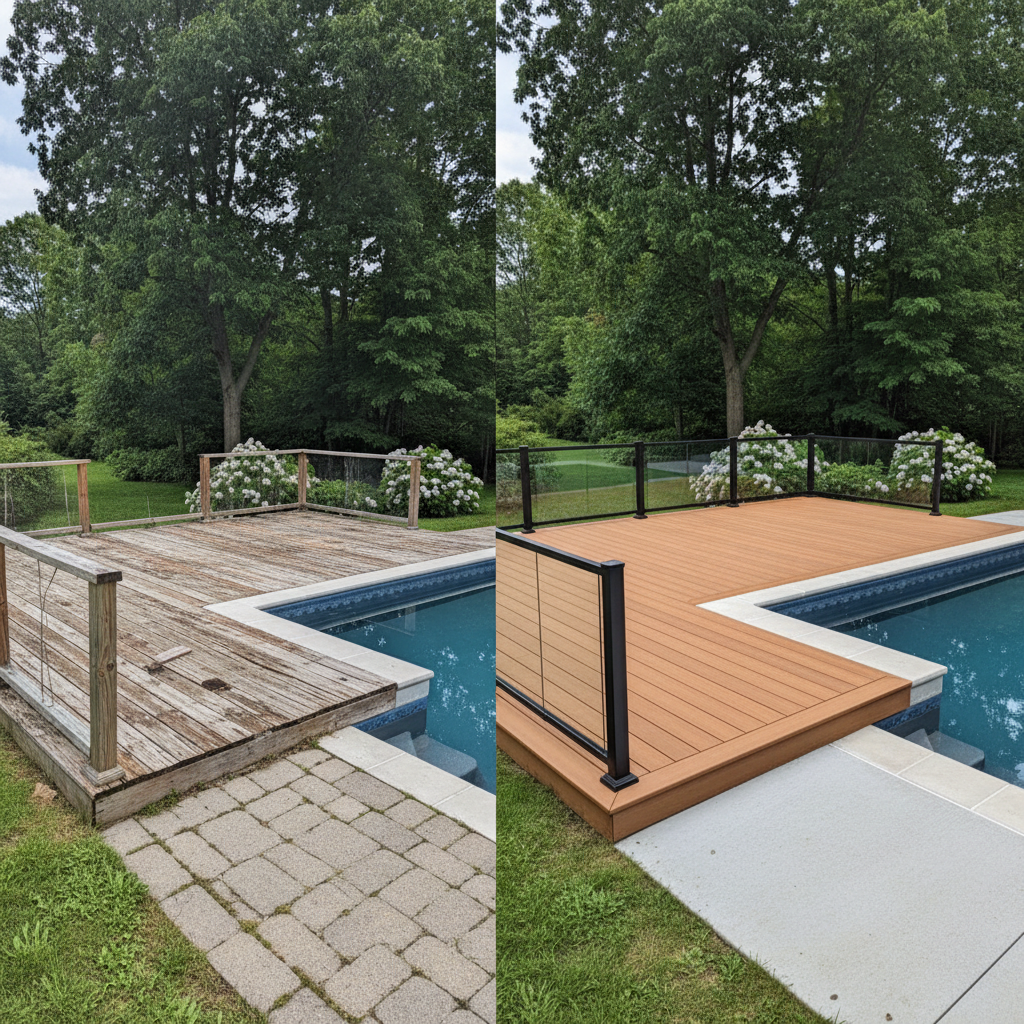
You're ready to upgrade your pool area, and a new deck is probably at the top of your list. But then comes the big question: what material should you use? For most folks in Bristol, it boils down to two main contenders: good old pressure-treated wood or a modern composite material. Both have their place, but they're definitely not created equal, especially when you're talking about a pool environment.
Cost: What's the Initial Hit?
Let's get this out of the way first: money. Pressure-treated (PT) wood is almost always going to be cheaper upfront. You can walk into any lumberyard and pick up PT boards for significantly less per linear foot than composite. If you're on a really tight budget and just need a functional deck around your pool, PT wood will get you there for less initial investment. It's a straightforward material, and installation costs are generally lower too because it's easier to work with.
Composite, on the other hand, will cost you more upfront. Sometimes it's double, sometimes even more, depending on the brand and series you choose. This higher material cost is the biggest hurdle for many homeowners. But don't just stop there; you've got to look at the bigger picture.
Durability & Longevity: How Long Will It Last?
This is where the rubber meets the road, especially for a pool deck. Pressure-treated wood is designed to resist rot and insects, which is great. However, it's still wood. It's going to absorb water, expand, contract, and eventually splinter, crack, and warp. Around a pool, it's constantly getting wet, then drying in the sun. This cycle is brutal on wood. Even with the best care, you'll see wear and tear much faster than a deck that's just out in the yard.
Composite materials are engineered for durability. They're made from a blend of wood fibers and plastic, often with a protective cap. This means they're incredibly resistant to moisture, mold, mildew, and insects. They won't splinter, crack, or warp like wood. The constant splashing and high humidity around a pool deck? Composite handles it like a champ. We've seen composite decks around pools in places like the Federal Hill area hold up beautifully for years, even with heavy use and our sometimes harsh CT winters.
Maintenance: Your Weekend Chores
Here's the real kicker for many homeowners. A pressure-treated wood deck around a pool needs a lot of love. You'll need to clean it regularly to prevent algae and mildew growth (which thrive in damp conditions). Then, you'll need to sand, stain, or seal it every year or two. This isn't just a quick job; it's a significant time commitment and an ongoing expense for materials. If you skip it, your deck will degrade quickly, look terrible, and become a safety hazard with splinters.
Composite decks are practically maintenance-free. A simple cleaning with soap and water (or a composite deck cleaner) is usually all it takes to keep it looking good. No sanding, no staining, no sealing, ever. Think about what your time is worth. Those hours you'd spend maintaining a wood deck can be spent enjoying your pool instead.
Appearance & Feel: Looks Matter
Aesthetics are subjective, but there are some clear differences. New PT wood looks decent, but it weathers to a gray color unless you constantly maintain it. You can stain it to various colors, but that color will fade over time. It's also prone to splinters, which is a big concern for bare feet around a pool.
Composite decks come in a huge range of colors and textures, many mimicking the look of natural wood very convincingly. The color is consistent throughout the material (or in the cap), so it stays true for years. No fading to gray. And no splinters – a huge plus for kids and adults alike. Some older composite boards could get hot in direct sun, but modern capped composites have improved significantly in this area, offering cooler surfaces.
My Recommendation for Bristol Pool Decks
Look, if your budget is absolutely the primary driver and you don't mind the yearly maintenance, pressure-treated wood can work for a pool deck. But if you're asking me, as someone who's built and repaired countless decks for All Star Decks over the years, for a pool deck in Bristol, composite is almost always the better choice in the long run.
The upfront cost is higher, yes. But when you factor in the vastly superior durability, the minimal maintenance, the consistent appearance, and the splinter-free surface, composite wins hands down for a pool environment. You'll spend more time enjoying your pool and less time working on your deck. That peace of mind and saved labor hours are worth every penny over the lifespan of the deck. It's an investment that truly pays off, especially with the constant exposure to water and sun that a pool deck endures in our Connecticut climate.