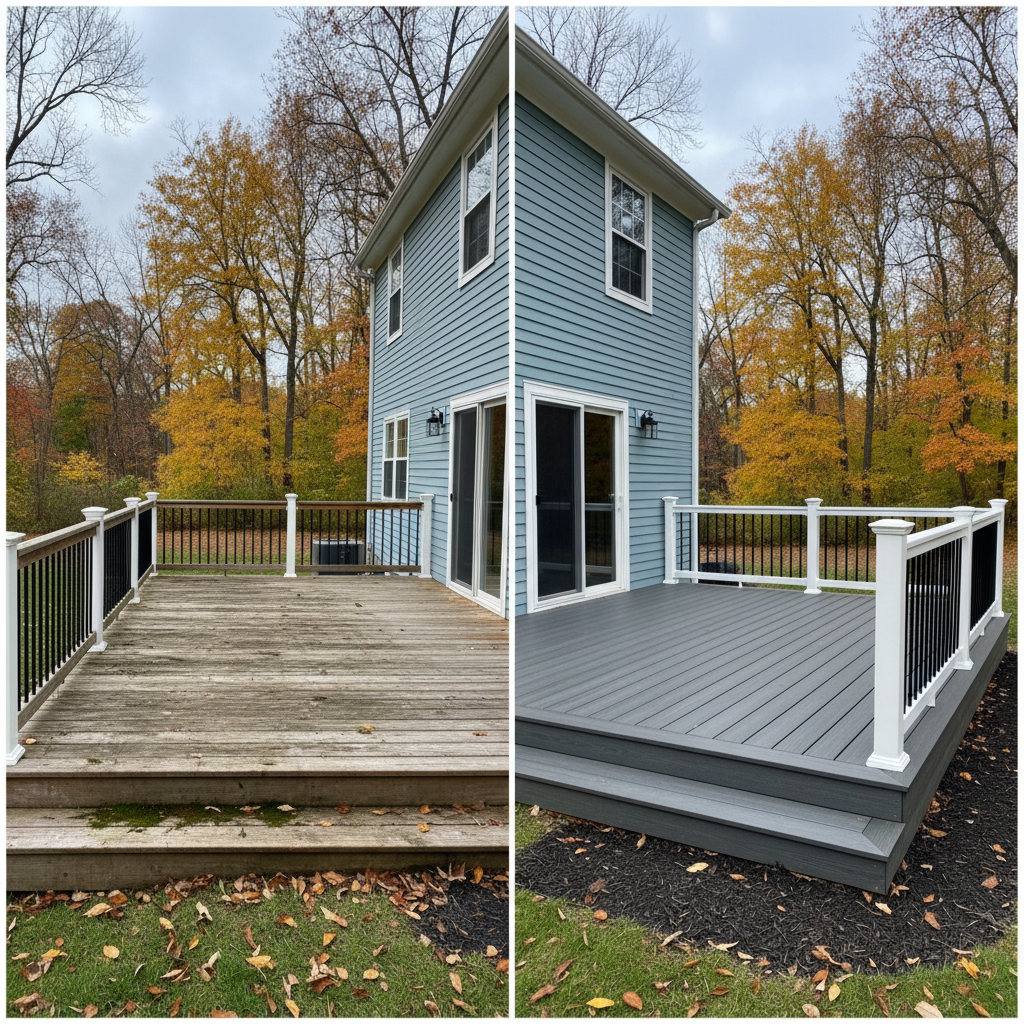
You've decided on composite for your new deck, which is a smart move for our Bristol weather. But did you know there are different types of composite boards? Specifically, we're talking about solid versus hollow profiles. It's not always obvious, and it can make a real difference in how your deck performs and feels over the years.
Solid Composite Decking: The Tried-and-True
When you picture a traditional wood deck board, you're thinking solid. Solid composite boards mimic that structure. They're dense, heavy, and feel substantial underfoot. Most of the premium capped composite lines, like certain Trex or TimberTech products, are solid or have a very dense core.
Pros of Solid Composite:
- Feel and Stability: This is a big one. Solid boards feel incredibly stable. There's no flex or bounce, which is especially important if you're building a larger deck or one that will see a lot of foot traffic, like for backyard parties in Federal Hill.
- Durability: Because they're solid, they're less prone to impact damage. Drop a heavy grill tool? It's less likely to dent a solid board. They also handle the freeze-thaw cycles we get here in Connecticut better because there's nowhere for water to collect and expand inside the board.
- Sound: Solid boards are quieter. Hollow boards can sometimes have a slight 'drumming' sound when walked on, especially with certain shoe types.
- Fastening Options: You can typically face-fasten solid boards with screws without worrying about crushing the material, giving you more flexibility in installation methods.
Cons of Solid Composite:
- Cost: Generally, solid composite boards are more expensive per linear foot. You're paying for more material.
- Weight: They're heavier, which can increase shipping costs and make installation a bit more labor-intensive. This isn't usually a deal-breaker, but it's something to consider for really large projects.
- Heat Retention: Some solid boards, particularly darker colors, can retain more heat than hollow ones, making them hotter to the touch on a sunny summer day.
Hollow Composite Decking: The Lighter Alternative
Hollow composite boards are designed with internal channels or chambers, making them lighter and often more cost-effective. Think of them like a honeycomb structure inside. Many entry-level and mid-range composite options use this profile.
Pros of Hollow Composite:
- Cost-Effective: This is usually the main draw. Less material means a lower price point, which can be attractive if you're on a tighter budget.
- Lighter Weight: Easier to transport and handle during installation. This can sometimes shave a little off labor costs, though not always significantly.
- Cooler Surface: The internal air pockets can sometimes help dissipate heat, making them feel slightly cooler than solid boards in direct sunlight.
Cons of Hollow Composite:
- Flex and Feel: This is where they often fall short. Hollow boards can feel a bit more flexible or 'bouncy' underfoot. If you're used to a solid wood deck, you might notice the difference.
- Durability Concerns: While still very durable, they can be more susceptible to impact damage. A heavy object dropped on a hollow board might cause a dent or even crack the surface if it hits just right on a thin spot.
- Water Intrusion: This is a big one for our climate. If water gets into those internal chambers and freezes, it can expand and potentially damage the board over time. Most manufacturers have good sealing, but it's a risk.
- Installation Limitations: You typically can't face-fasten hollow boards directly with screws without risking crushing the material or compromising its integrity. Hidden fasteners are usually the only recommended method.
My Recommendation for Bristol, CT Homeowners
Given the climate we have here in Bristol – the heavy snow loads, the freezing rain, and those wild temperature swings – I almost always lean towards solid composite decking. The added stability, superior impact resistance, and reduced risk of water intrusion and freeze-thaw damage make it a better long-term investment for most homeowners.
Yes, it's a bit more upfront, but when you're building a deck that you want to last for decades, you don't want to cut corners on the core material. We've seen too many issues with hollow boards over the years where the internal structure just can't stand up to constant abuse from our weather. You want a deck that feels substantial, looks great, and holds up year after year without worry.
At All Star Decks, we install both, but we'll always talk through these differences with you so you can make an informed choice that fits your budget and your expectations for how your deck will perform. It's your outdoor living space, and it should be built to last.
Still Have Questions?
Picking the right deck material is a big decision. If you're still weighing your options or want to see samples of both solid and hollow composite boards, give us a call. We're happy to walk you through it and help you design a deck that's perfect for your Bristol home.